Stop The Press Part III

Another slightly more exotic area was the area of the executives of the company. This cabinet was behind the canteen.

A former meeting room.

Red fabric and dark wood were the dominant colours of this area of the building.

If I’m not entirely mistaken, this was where the CEO sat.

The third floor had beautiful parquette floors apart from the canteen. Second floor was all plastic and first floor was ceramic tiles.

Another lobby. There was still some company stuff like art, which hadn’t been moved to a new location.

And this, I think, was my old office for a while. It’s unrecognizeable now.

One of the offices had had a new floor done not so long ago.

And this was the classroom upstairs. Here I began my career with this company with the summer editor training.

Another big office room upstairs.

Thanks and goodbye, says the blackboard. And yes, we had a ball pool.

Another look at the executive lobby. It was called the Harris lobby and it was named after the company, who delivered the first printing press to this location, when it was new.

Another look at the mess left behind in the editorial office. The final weeks involved a massive cleaning opereation, where we emptied the closets and cupboards from everything we didn’t need anymore.

The clock still displayed the correct time. It indicated I had only spent around 20 minutes in the building.

The metallic signs displaying where to find different departments were distributed to the people who worked those roles.

I moved these photos to the computer and looked through them. I thought they were bad, even more disappointing than the ones from The Working Class Girl and The Worker Gal.

I had been used to photographing with my school’s Canon 5D’s, but after graduation I had been forced to use my own 1000D. It wasn’t nearly as good, in fact it was lousy. It performed extremely badly in dark and gloomy places, which abandoned buildings often were.

I lost my passion. I came home, stuffed my 1000D in a cupboard and never took a single shot with it again. Photography had been such an integral part of my urbexing, that I considered my career in it over for good.

Stop The Press Part II

On the third floor was some sort of a representation lobby, which was far more luxurious than the lobby downstairs. During the last days of the building’s use all kinds of stuff distributed for free to the employees were located here.

The corridor looks much scarier than it used to be. To the right was the kitchen, to the left was the balcony seen in the previous post. Up front is the canteen.

And the canteen. This was where we had lunch every day.

There was still electricity in the building, but I didn’t know where the switches were. I had never needed them.

A look towards the kitchen. I had only been at the door, as it was customary, that the first one in the morning meeting took yesterday’s coffee pots back and brought fresh ones.

The dust on the floor was an indication of some demolition work done. The kitchen appliances had been removed and apparently sold forward.
For me this was the most exotic part of the house. I had been everywhere in the building except for this room.

I didn’t know they needed that many fridges to feed us daily.

The canteen was operated by an independent company. It was open for other companies in the area but not really for the public.

To be continued.

Stop The Press Part I

The demolition of Kaleva Print was just the beginning of changes on the premises. The headquarters of newspaper Kaleva was still located in the older part of the complex, which was still standing. Every morning we went to work to a building, which had an intact facade, but the backside was a massive water filled hole and the back wall had formerly been offices.

The company bought a new location and started building there. When the summer ended, a date was announced: we would be out of the old offices by early December.

A frantic operation to clean up 51 years of newspaper history began. A part of the stuff was directly donated to museums, a part was sent to the new premises. There was an auction to sell some of the more valuable stuff, and one lobby became a take what you like -place for the company staff.

I took this photo when I went to work to this building for the last ever time. Built for the newspaper in 1966 to replace its previous headquarters, the building had been expanded twice. The early 1980’s expansion was the one demolished in 2016, the late 1980’s expansion is still behind this building.

The following day we were already in the new location. I called the company’s property manager and asked for permission to go and photograph the old building before it was handed over to the construction company. He agreed, and on the 100th birthday of Finland I went in.

I was used to entering to the warm smile of the receptionist. Now it was dark and empty.

I had planned to wake up early and photograph in daylight, but we celebrated independence day so heavily that I only got out of bed at 2 pm and it was closer to 3 when I finally got to the site. It was already getting dark, and there was almost no natural light inside the building.

This used to be the marketing department. It was located on the ground floor right behind the reception.

For more than five years I walked up these stairs to work every morning.

This is where the journalists worked. The last evening shift has left their greetings. But so did the ghost of Kaleva.

The ghost of Kaleva was no joke. I heard about him in late 2014 or early 2015. I was ending my evening shift and bringing my water bottle back to my seat, when I saw the managing editor walk to the corridor, where the management had their offices. There was something strange about this so I followed him.

There was nobody in the corridor. The offices were locked and the lights were out.

“I saw someone over there. I thought it was the managing editor, but there’s nobody there”, I said to my boss.

“You saw the ghost of Kaleva.”

“The what?”

She told me that for years there had been reports about somebody slamming the door seen on the left below the balcony in the picture above, walking all the way through the space and slamming the door right behind the camera in the picture. The ghost was only heard. Nobody had ever actually seen it apart from a cleaning lady decades ago, and now me.

Another call to the property manager, and I was allowed to spend the night at the office. I stayed up until about 4.30 am, when I decided to get some sleep. Right then somebody slammed the door. I went to check, but there was nobody there.

I didn’t sleep that night.

But the ghost had a wonderful sense of humour. Every night before the annual meeting of the executive board, it clogged the toilet closest to their meeting room. And when the final newspaper was made in this building, it set off the fire alarm in the same toilet. The firefighters came, the building was emptied, but there was no fire. And this happened three times during that evening.

I spent the last times working in this corner of the building. The annual staff party was the funeral of the building, and the can of long drink in the right corner was actually consumed by me that night.

All the cupboards were full of stuff and old magazines, truckloads of which were thrown away before the move. It’s so strange to see them empty now.

To be continued.

The Day the Chimney Fell

The newspaper said that the battle was over. The forest giant owning the old Martinniemi sawmill’s power station was given permission to demolish it along with the huge chimney, which had been the landmark of the village for close to a hundred years.

I found the place in 2011, photographed there in 2014 and visited it twice during the previous summer. I did a photoshoot with a dancer just a few months before the news about the demolition came.

My aspiring adulthood meant, that I was working during the days. In Oulu it gets very dark very early, so I had no chance to visit the site during daylight hours. I had to do it after my shift had ended.

This was the last picture I managed to take from the old power station. I needed the help of my car’s headlights. As you can see, demolition had already started. The place was now more heavily guarded than it was during its time as an urbex location. A patrolling guard made a tour to see what I was doing, but as he saw that I just photographed, he went away.

First they tore down the power station, then the chimney with a demolition robot hanging from a crane. And yet another local landmark disappeared.

This is how the place looked like in 2011.
And here’s the photo shoot with the dancer in 2017.

The Other Nature of Deserted Finland

“I want this to be my last sight before I die.”

That has been said about the scenery from the top of the fjeld Pyhä-Nattanen in Sodankylä, Lapland. And when somebody speaks that highly of a place, it has to be seen.

The only problem with the place was, that there are two sides to deserted Finland. The first one featured in this blog are the hundreds, if not thousands of abandoned buildings all around the country which are left without use, when people move to bigger cities and fertility rates drop. The second side is the Finland, where there never were any human dwellings.

I hired a trade union cottage, which was about as close to Pyhä-Nattanen, as you could get, and I still was 250 kilometers away. Early in the morning I started driving towards the national park, where the fjeld was located. My map app warned me about dirt roads ahead, but I didn’t believe there would be any.

…the first 100 kilometers or so were dirt road.

I finally got to the highway and after another exhausting 100 kilometers I found another dirt road, which looked like someone had bombed it. It was extremely difficult to drive without damaging the car.

It took me around three hours of driving, but finally I was on the trail. Let the pictures speak for themselves.

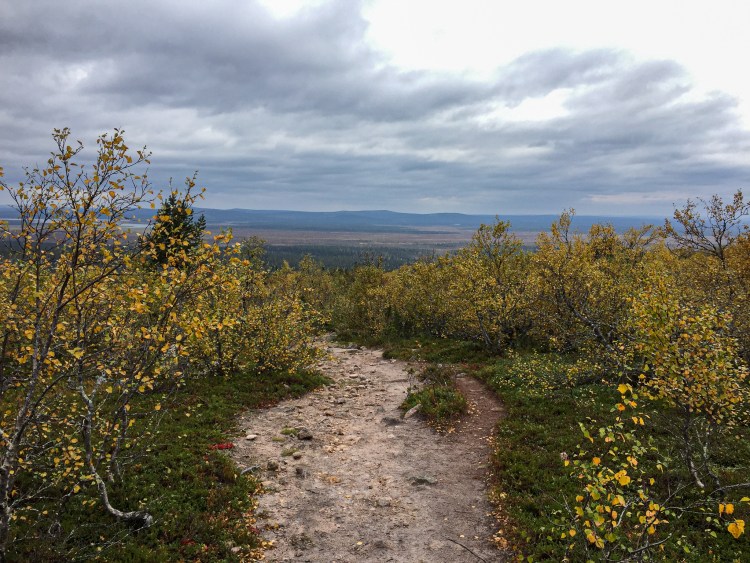
At first it was just beauty and nature.

But soon it became evident I had a rocky road in front of me.

I spent the trek listening to a playlist called Epic Movie Soundtracks and thinking about my life.

And I had quite a lot to think about. I had graduated in the spring and needed to think what I wanted to do as an adult. I had basically fulfilled most of my big dreams and I wasn’t even 30 yet.

I had always enjoyed photography, but the two collections, The Working Class Girl and The Worker Gal I had photographed the previous month were still sitting on my desk waiting to be edited. I was extremely disappointed with them and my skills with Photoshop were so limited, that I couldn’t make them work. I started to lose interest towards the whole hobby.

My way forward in photography looked exactly as steep and unstable as this hillside, which was on en route to the top.

A look down made me feel like it was all worth the climb.

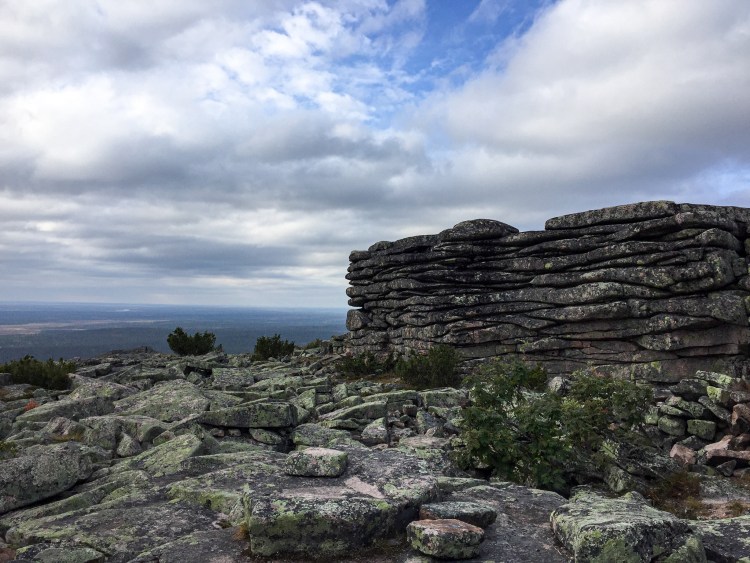
This was my first view of the top. Those rock formations are natural. This was originally a much higher mountain, and that is what is left after erosion has swept the rock away. The place was a holy site for the indigenous Sámi people.

And this is the famous view from the top. It really was worth all the effort.

More views of the rock formations.

But guess what, this place actually has something to do with urban exploration. There are remnants of a WWII German surveillance station somewhere here. I didn’t find them, I didn’t even look for them.

I don’t think the topmost pile is a natural formation. You shouldn’t actually be building those on your own here.

One final look at the scenery from the top.

Lapland is a wonderful place during all four seasons. During winter the sun never rises, during the summer it never sets. During spring the nature slowly wakes up from under a thick layer of snow and the autumn is just beautiful in all its colours. The autumn colours last for a very short time only, so your timing needs to be spot on.

Now I will reveal two facts about myself.

  1. I really don’t like war history. I usually don’t explore bunkers, trenches or stuff like that even though this country is full of them. I just couldn’t care less.
  2. I love hiking in the nature and national parks. But I’m not here to write a blog about them. So I’ll let this post be the one exception to my blog with abandoned buildings.

It was time to head down, drive another three hours to my cottage, warm up the sauna and drink bad Finnish beer. The next adventures will be all about abandoned buildings again.

Not All Lost Souls Will Be Missed

My friends and colleagues, municipal politicians and construction professionals had long complained to me about my will to preserve every single building slated for demolition. If you have read this blog this far, you might probably have an idea whether they are right or not. If you haven’t maybe you should go to the beginning and try to make up your own opinion.

Personally, I disagree. It’s true, that I have disagreed with the demolition of most buildings featured in this blog. But if I seen a building not worth saving, I probably haven’t even bothered to photograph it. There’s one exeption, however.

This building was constructed in the late 1950’s on the opposite side of Oulu Central Railway Station. In the eight years or so I got to know it, it housed a couple of very cheap hotels and a fairly good restaurant.

I always thought this building was too small for its surroundings, boring and ugly. And when I saw that demolition had started, I didn’t shed a single tear. This box was good to go. And its replacement was much better.

So no, I don’t want to protect every single building. Just most of them.

The Worker Gal

After our photo shoot in the old workers’ academy, we headed to the abandoned power plant in Martinniemi to continue with a different theme. After a nice midday dance session we went to have lunch and coffee to the marketplace in Oulu, and vowed to have another as soon as possible.

Again a selection of my personal favourites from the power plant:

More images in the gallery.

The Working Class Girl

Long time no see, the Dancing Ghost of the School. After a long time of being busy attending our own businesses, we managed to find a day we both had off work and other activites. We fondly remembered our previous photo shoot and decided to take a rematch.

There were few suitable locations around, where we could think of a nice and recognizeable theme. But I then remembered the workers’ institute where I had photographed in 2014 and 2016. I told my friend to dress in red. She would become the working class girl, the spirit of the leftist movement, free and wild. And off we went.

Here’s a selected pick of photos from the day.

Those were some of my personal favourites. There’s more of them in the gallery.

No Fame Can Save You When Fortune Speaks

This, my dear readers, has for years been the most famous buildings that have been abandoned in Finland in years. A restaurant was founded here in the 1930’s, and the building was enlarged to its current shape in 1939. The restaurant was in the wing closer to the camera, the large firewall seen in the middle of the building separated it from a movie theatre.

The movie theatre closed down in the 1980’s, and a flea market moved in. On the other side there was a hotel upstairs and a restaurant downstairs. And it was not just any restaurant. It was the centre of culture in the whole city. Musicians, writers and other artists from all around the country visited the place. It was known everywhere.

The building changed hands several times. In the end it was inherited by a foundation, which aims to enhance local culture. The final private owner thought perhaps, that the rich history of the building would be best preserved so.

It soon became evident, that the foundation intended to enhance, not protect local culture. They evicted the tenants at the end of 2012, 78 years after the restaurant was founded, and announced plans to demolish the house now in a very bad shape, and replace it with a block of flats.

The culture people and their friends didn’t give up without a fight. They collected names, organized events and even complained to the courts. A local demolition contractor said he would never be the one to tear it down.

The courts overturned the city general plan concerning these premises. A limbo ensued. The city started planning from scratch, the house was left standing empty. And it had stood so for five years, when this photo was taken.

Just a few blocks away was this lively, yet unremarkable looking building. When it was built in the 1950’s, it was the first shopping centre in the whole region and one of the first of its kind in the whole country. The museum authorities saw it as worthy of being protected in the very same general plan mentioned earlier, but this wasn’t done.

Although still looking lively, life had escaped its walls. The premises were empty, all businesses had moved. A new plan had been approved to construct new housing here, and the pioneering building was waiting for its fate.

So no fame is enough, when fortune speaks.

The Cursed School Part II

After seeing the texts described at the end of the last post, this place started really giving us the chill. I mean they were texts, just texts written by teenagers feeling desperation in this city of hopelessness and social problems. But still they were something different.

“Are we alone in the Universe”, asks a Swedish paper from the sixties. This was even more weird.

An auxiliary building can bee seen through the yard. We couldn’t approach it, as we saw huge rolls of recycled paper in between.

Then we started hearing strange noises from the yard. It was either the wind in the bushes or someone walking, but we didn’t see anybody. We started to freak out, as we knew the door bolted sideways in the opening would prevent a quick escape.

We explored another large classroom and felt easy at first.

“The black curse.
You are ded
Gay
Ass”

“You die if you don’t leave.
Die!”

That’s the name of a Finnish place and an insulting word about Swedish speaking finns. Below them is another claim that I’m dead and it’s equally misspelled.

There was just some too menacing about that. That somebody wishing us dead couldn’t hyphenate and couldn’t spell dead correctly, as there’s one letter missing. Both elementary mistakes, which are taught correctly on grade one in elementary school.

Whoever he was, we didn’t want to meet him. The mood in the school was too much for us and we left. It was the first time I left an exploration without finishing it because I was too afraid.

Back outside things liiked peaceful again. It was a beautiful school, which could have been turned into something great, had someone taken care of it.

There was so much left to explore. We didn’t even touch the second floor.

We tried to enter the teacher’s apartment building, but it was too outgrown.

One final look at the facade of the building, as I whispered my wows to return.